
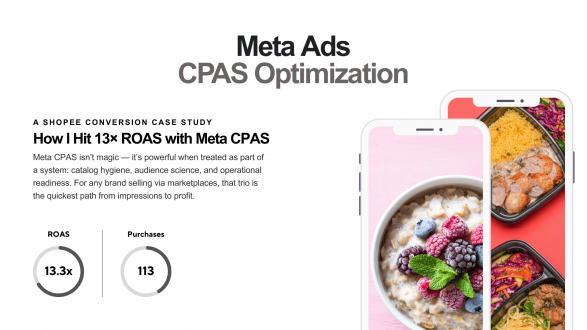
Optimizing catalog sync, dynamic retargeting, and testing to turn ad spend into real sales.
When we first looked at the campaign data for PT Nana Trend Lestari, the problem was clear: we had traffic and product interest, but not the efficient bridge to Shopee purchases. Meta CPAS (collaborative ads) promised a direct path — dynamic product ads that could push shoppers back into the marketplace — but only if catalog and audience signals were right.
So my mission was simple and measurable: use Meta CPAS to drive Shopee conversions efficiently.
We were reaching users, but conversion efficiency was inconsistent. A few issues stood out:
Catalog feed wasn’t fully synchronized with the store (mis-matches in SKU, price, or availability).
Retargeting audiences were broad and unfocused.
Performance fluctuations made scaling risky.
The plan had to fix the foundation first — then scale.
I integrated the Shopee product catalog into Meta Ads Manager and audited every entry. Accurate SKUs, exact pricing, and correct availability were non-negotiable — dynamic ads live or die on feed quality.
I ran methodical tests across layered audiences:
Broad interest sets to seed new traffic
View-content audiences to capture engaged users
Add-to-cart retargeting as the highest-intent pool
Each segment had tailored creatives and ad copy designed to match user intent.
Instead of weekly guesswork, I checked performance daily. That let us identify cost-efficient hours and adjust bidding aggressively during the strongest windows — saving budget and maximizing conversions.
I coordinated with e-commerce and ops to align promotions, vouchers, and stock. If we planned to scale a SKU, we ensured the listing and inventory were ready.
Metric highlights from the optimized CPAS campaign:
Ad spend: Rp 1,690,000
Revenue: Rp 22,500,000
ROAS: 13.33×
Purchases: 113
This campaign validated that a clean feed + tight audience strategy + daily intervention can convert platform interest into real marketplace revenue — and do it at scale.
Dynamic relevance: accurate catalog data let Meta show the exact product the user viewed.
Audience hierarchy: different creative for different intent reduced wasted spend.
Speed of action: daily monitoring turned small signals into quick wins.
Operational alignment: promos + stock readiness prevented wasted clicks.
Meta CPAS isn’t magic — it’s powerful when treated as part of a system: catalog hygiene, audience science, and operational readiness. For any brand selling via marketplaces, that trio is the quickest path from impressions to profit.
This CPAS project reminded me of something simple but easy to forget:
Great performance doesn’t come from big budgets — it comes from clean systems.
Once the catalog was healthy, the funnel structured, and the audience signals clear, Meta’s algorithm finally had the ingredients it needed to work with us, not against us. The return wasn’t luck, and it wasn’t one viral SKU — it was the result of daily decisions stacking up:
small tweaks, tight testing, and quick reactions.
And that’s the beauty of CPAS when done right.
It turns marketplace browsing behavior into predictable conversions.
It transforms “maybe later” shoppers into actual buyers.
It gives brands a scalable path where every sale is trackable and every improvement is measurable.
For brands that rely on Shopee or TikTok Shop, CPAS isn’t just an ad format —
it’s the bridge that connects your product catalog to your customer’s intent.
Objective:
Optimize Meta Ads CPAS campaign to drive Shopee sales conversion through dynamic product retargeting and catalog synchronization.
Actions:
Results:
